
Easy holiday Malta
places of interest
Valletta
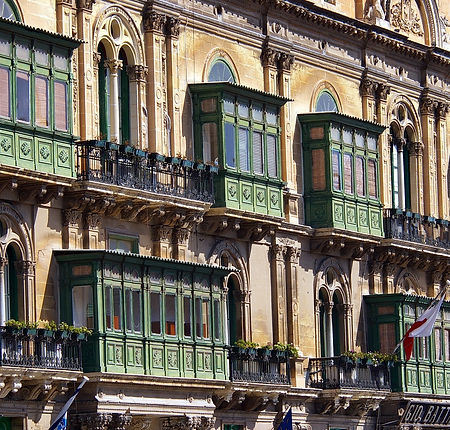
Valletta, The Fortress City, Citta' Umilissima, “A city built by gentlemen for gentlemen”. These are some of the names given to Malta's capital city: a living, working city, the administrative and commercial heart of the Islands. Valletta is named after its founder, the respected Grand Master of the Order of St. John, Jean Parisot de la Valette. The magnificent fortress city grew on the arid rock of Mount Sceberras peninsula, which rises steeply from two deep harbours, Marsamxett and Grand Harbour.
Started in 1566, Valletta with its impressive bastions, forts and cathedral, was completed in the astonishingly short time of 15 years. Valletta has many titles, all recalling its rich historical past. It is the “modern” city built by the Knights of St John; a masterpiece of the Baroque; a European Art City and a World Heritage City. Today, it is one of the most concentrated historic areas in the world. The city is busy by day, yet retains a timeless atmosphere. The grid of narrow streets boasts some of Europe's finest art works, churches and palaces.
Hosting a vast cultural programme, walking around Valletta you’ll come across an intriguing historical site around every corner: votive statues, niches, fountains and coats of arms high up on parapets. Narrow side streets are full of tiny quaint shops and cafés, while Valletta’s main streets are lined with larger international branded shops for fashion, music, jewellery and much more.
Ħal-Tarxien
The town is known mostly for its prehistoric temple complex dating back to the copper age, which gives rise to the distinct Tarxien Phase of megalithic building on the Islands. The temples and their artefacts provide some of the best insights into the rituals, beliefs and building skills of these prehistoric peoples. Several huge statues, known as the `fat ladies', today housed in the National Museum of Archaeology, Valletta, come from Ħal Tarxien.

Għar Dalam Cave & Museum

Ghar Dalam Cave is a highly important site as it was here that the earliest evidence of human settlement on Malta, some 7,400 years ago, was discovered.
The display area consists of two parts: the cave and the museum, which exhibits a remarkable wealth of finds from animal bones to human artefacts. An overlaying river running at right angles formed the cave. It is some 144 metres deep, but only the first fifty metres are open to visitors. The lowermost layers, more than 500,000 years old, contained the fossil bones of dwarf elephants, hippopotami, micro-mammals and birds. Above the pebble layer that follows is the so-called ‘deer’ layer, dated to around 18,000 years ago. The top layer dates to less than 10,000 years and holds evidence of the first humans on the Island.
Marsaxlokk
Marsaxlokk Bay is Malta's second largest natural harbour. It is the best place to see the colourful, traditional Maltese fishing boats, the Luzzus, with the mythical eye painted on their prows.
The village is the Islands' main fishing harbour; its Sunday fish market a fascinating insight into local life and a traditional industry. The stalls brim with the night's catch - fish of all shapes, colours and sizes. The village itself has many good fish restaurants. Marsaxlokk derives its name from the Arabic word marsa, meaning harbour, and Maltese for the south-easterly Mediterranean wind, the Xlokk (Sirocco in Italian). Marsaxlokk, with its sheltered habour, was an easy landing place for pirates and the Ottoman Turks. It was here that the Ottoman Turks landed for an attack which ended in the Great Siege of 1565. Napoleon's army landed here in 1798; and in recent times, the harbour was the scene of the Bush-Gorbachev Summit,1989.
The headland to the left of the Bay is Delimara Point. It has two attractive, secluded rocky inlets suitable for swimming: Peter's Pool; and the furthermost part of the headland. Fort Delimara, on the west of the peninsula, was built by the British in 1881 to guard the entrance to Marsaxlokk Bay.

Mdina

According to tradition it was here that in 60 AD that the Apostle St. Paul is said to have lived after being shipwrecked on the Islands. Furthermore it is said that St. Paul resided inside the grotto know as Fuori le Mura (outside the city walls) now known as St. Pauls Grotto in Rabat. Lamp lit by night and referred to as “the silent city”, Mdina is fascinating to visit for its timeless atmosphere as well as its cultural and religious treasures.
Mdina has had different names and titles depending on its rulers and its role but its medieval name describe it best – ‘Citta’ Notabile’: the noble city. It was home then, as now, to Malta’s noble families; some are descendants of the Norman, Sicilian and Spanish overlords who made Mdina their home from the 12th century onwards. Impressive palaces line its narrow, shady streets. Mdina is one of Europe’s finest examples of an ancient walled city and extraordinary in its mix of medieval and Baroque architecture.
Popeye's Village
The film set of the 1980 musical production "Popeye", also known as 'POPEYE VILLAGE', was constructed in Anchor Bay during the last 7 months of 1979. Today the "village" has grown into a family attraction featuring a number of colorful fun activities for all young at heart. Here you will meet famous cartoon characters to greet and entertain your kids. Grownups can be part of a filming experience with the animation crew, and enjoy a number of attractions such as boat rides, water trampolines, sun bathing decks, beach lido, food outlets, winery offering free wine tasting, mini golf and Santa's toy town. There is also Malta's largest jump around and a fun park with numerous rides for kids.

The Three Cities

The Three Cities offer an intriguing insight into Malta and its history. Left largely unvisited, these cities area slice of authentic life as well as a glimpse into Malta's maritime fortunes. The Three Cities can rightly claim to be the cradle of Maltese history, as Vittoriosa, Senglea and Cospicua have provided a home and fortress to almost every people who settled on the Islands. Their harbour inlets have been in use since Phoenician times: the docks always providing a living for local people, but also leaving them vulnerable when Malta's rulers were at war. As the first home to the Knights of St. John, the Three Cities' palaces, churches, forts and bastions are far older than Valletta's.
Gozo
Gozo is known to provide a tranquil haven for a tempo and scene change. The charm of Malta's sister Island is immediately apparent; it's greener, more rural and smaller, with life's rhythms dictated by the seasons, fishing and agriculture.
Steeped in myth, Gozo is thought to be the legendary Calypso's isle of Homer's Odyssey - a peaceful, mystical backwater. Baroque churches and old stone farmhouses dot the countryside. Gozo's rugged landscape and spectacular coastline await exploration with some of the Mediterranean's best dive sites.
The island also comes complete with historical sites, forts and amazing panoramas, as well as one of the archipelago's best-preserved prehistoric temples, Ġgantija.
Comino

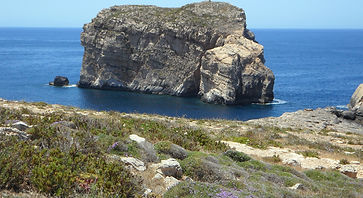
Situated between Malta and Gozo, the smaller island of Comino is a paradise for snorkelers, divers, windsurfers and ramblers.
Only 3.5 square kilometers, Comino is car-free and apart from one hotel, is virtually uninhabited.
The island's main attraction is the Blue Lagoon. In summer, this sheltered inlet of shimmering aquamarine water over white sand is very popular with day-trippers. Other beaches on the island include Santa Marija Bay and San Niklaw Bay.
Comino is also worth a visit in winter, and is ideal for walkers and photographers. With no urban areas or cars on the island, one can easily smell the scent of wild thyme and other herbs.
Comino was inhabited in the Roman period, but did not have much significance until the Knights arrived. It then had a dual role: hunting grounds and a staging post in the defence of the Maltese Islands against the Ottoman Turks.
The island had proved a useful base for pirates operating in the central Mediterranean and, though stark and barren today, it was home to wild boar and hares when the Knights arrived in 1530. The Grandmasters went to great lengths to ensure that their game on Comino was protected: anyone found breaking the embargo on hunting could expect to serve three years rowing on a galley.
After WWII, Comino remained a backwater until its fortunes revived with tourism in the mid-1960s.